
Right now, the official Vietnam Immigration portal openly lists eVisa fees at USD 25 for a single-entry eVisa and USD 50 for a multiple-entry eVisa, with standard processing of 3 working days. The same official portal also shows that Vietnam still has a separate immigration service for applying for visas at overseas Vietnamese representative offices and checkpoints, but the public-facing pages do not present one simple universal visa-on-arrival fee table in the way they do for eVisas. For most travelers in 2026, that makes the eVisa the clearer and more predictable pricing route.
Quick Answer: What Is the Visa on Arrival Vietnam Price in 2026?
The most practical answer is this: Vietnam’s official public immigration pages clearly publish eVisa fees, but they do not currently present one universal public visa-on-arrival fee chart for all travelers. The official, publicly listed visa fee most travelers can verify directly is USD 25 for a single-entry eVisa and USD 50 for a multiple-entry eVisa. Because the checkpoint visa route is handled differently, the final cost for what many people call “visa on arrival” can vary depending on how the case is processed and which service route is used.
| Visa Route | Public Official Fee Visibility | Published Fee | Best Use Case |
|---|---|---|---|
| Vietnam eVisa (single entry) | Clearly published | USD 25 | Most tourists and short-term visitors |
| Vietnam eVisa (multiple entry) | Clearly published | USD 50 | Travelers needing more flexibility |
| Visa at checkpoints / visa on arrival route | No single universal public fee table clearly published on the same public pages | Varies by processing route | Special or alternative entry arrangements |
That difference matters because many old blog posts still treat visa on arrival as the default option. In 2026, the better question is often not “How much is Vietnam visa on arrival?” but “Should I use the eVisa instead?” In many cases, the eVisa gives a more transparent cost and a cleaner process.
Why the eVisa Is the Clearer Official Option in 2026
Vietnam’s official immigration and embassy sources now point travelers strongly toward the eVisa route. The national immigration portal states that eVisa issuance is one of its main public services, and the eVisa instructions page explains the exact fee, image requirements, payment flow, and processing timeline. By contrast, the same immigration portal only identifies a separate “e-transaction applying for visa at overseas Vietnamese representative offices and checkpoints” without displaying a similarly simple fee summary on those public pages.
That makes the eVisa system easier to budget for. Travelers can see the price, fill out the form, upload their passport data page and portrait photo, pay electronically, and then track the result online. Vietnam’s official immigration portal says outside-Vietnam applicants can personally apply for an eVisa, that the eVisa is valid for up to 90 days with single or multiple entry, and that the fee is non-refundable if the application is refused.


Anyone looking at broader travel costs may also want to plan entry charges alongside accommodation, local transport, and destination spending. For general trip inspiration and destination reading, you can browse Travelearths travel content while building your itinerary.
Official Vietnam eVisa Fees in 2026
The official eVisa fee structure is currently one of the clearest parts of Vietnam’s immigration system. The published fee is USD 25 for a single-entry electronic visa and USD 50 for a multiple-entry electronic visa. The official portal also says processing is normally completed in 3 working days after payment and that the application will not be accepted if there is missing or incorrect information.
| Fee Type | Official Amount | Notes |
|---|---|---|
| Single-entry eVisa | USD 25 | Paid online through the immigration system |
| Multiple-entry eVisa | USD 50 | Paid online through the immigration system |
| Processing time | 3 working days | Under the official standard processing guidance |
| Refund policy | Non-refundable | Fee is not refunded if the application is refused |
These figures are especially useful because they come directly from the current immigration portal rather than from reseller or travel-agent pages. That gives travelers a more reliable starting point when comparing total Vietnam entry costs with other Southeast Asian destinations.
Can Everyone Use the Vietnam eVisa?
Vietnam’s policy is much broader than it used to be. The Embassy of Vietnam in the United States states in its official policy notice that Vietnam’s eVisa applies to citizens of all countries and territories, following the government resolution that took effect from August 15, 2023. That change is important because it means many travelers who once relied on older visa-on-arrival discussions can now use the official eVisa route directly instead.
The same policy update also extended the eVisa’s duration from a maximum of 30 days single entry to a maximum of 90 days with single or multiple entries. For many travelers, that extension removed the old need to search for workaround-style entry methods. In cost terms, this is helpful because it turns visa planning into a more transparent online process rather than a mix of approval letters, airport steps, and unclear third-party charges.
What Counts as the “Total Cost” of Entering Vietnam?
The visa fee itself is only part of the real total cost. Even where the official immigration charge is fixed, travelers often spend more on supporting items such as passport photos, payment card charges, scanned document preparation, airport transfers, printed copies of the approved visa, and last-minute itinerary changes. The true travel cost is always larger than the immigration fee alone.
Another important cost factor is mistakes. The immigration portal says that if information is missing, incorrect, or unidentified, the application will not be accepted. Since the eVisa fee is non-refundable if refused, even a simple form error can turn a small visa fee into a wasted payment. That makes accuracy part of the cost equation.
- Official visa fee
- Photo and passport scan preparation
- Card or payment processing friction
- Printing and document handling
- Possible reapplication cost if you make an error
- Flight changes or booking shifts caused by delays
How the Vietnam Entry Process Works in 2026
For most ordinary tourists and short-term travelers, the eVisa path is the clearest official route. The immigration portal says the process starts by preparing passport data page and portrait photo uploads, then completing the form, paying the fee electronically, and checking the result using the registration code, email, and date of birth. Once approved, the traveler prints the eVisa and uses it to enter or exit Vietnam through designated ports.
- Prepare your passport image and portrait photo.
- Complete the official Vietnam eVisa application form.
- Pay the correct visa fee online.
- Wait for standard processing, usually 3 working days.
- Check your result online using the registration code.
- Print the approved eVisa and carry it for entry.
The immigration portal also makes clear that eVisa holders must enter and exit Vietnam through approved checkpoints. The official published list of eVisa ports covers multiple international airports, land border gates, and seaports, which gives travelers more flexibility than older airport-only assumptions.
What About Traditional Visa on Arrival?
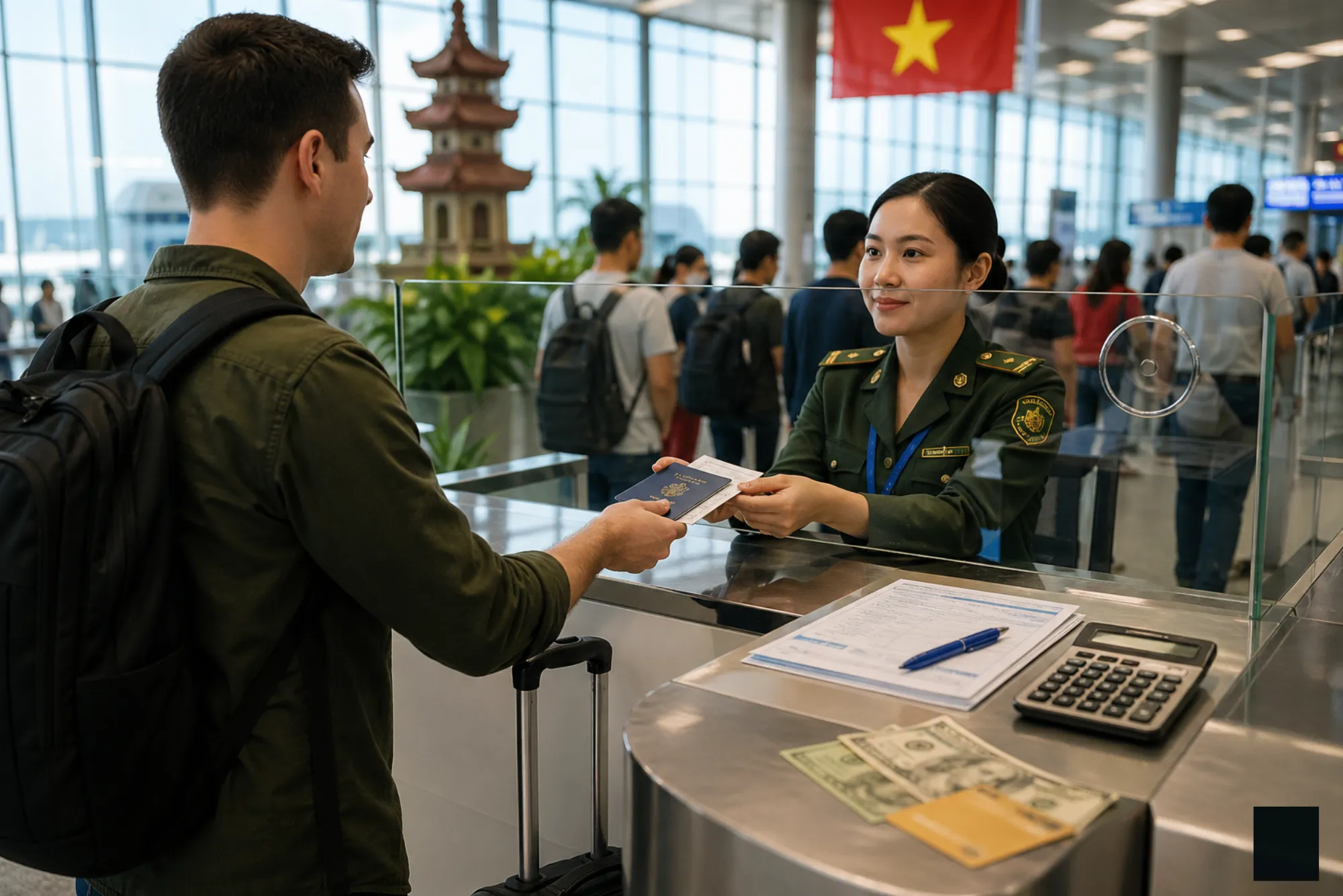
Older travel advice often described Vietnam visa on arrival as a normal airport process based on pre-approval letters. In 2026, official public-facing information is much more centered on eVisa and embassy-based visa routes. The current immigration portal still offers a checkpoint-related visa transaction service, but it does not publicly present a single universal fee schedule in the same way it does for eVisas. That is why travelers should be cautious about relying on old airport-visa blog posts that simplify the process too much.
The safest practical reading of the current official information is that Vietnam’s publicly transparent, standardized online pricing is attached to the eVisa route. For many travelers, that makes the eVisa the better benchmark when they search for “visa on arrival Vietnam price in 2026.”
Required Documents and Key Conditions
The official portal requires a passport data page image and a portrait photograph. It also notes image size rules and says that travelers need to keep the registration code for checking and completing the process. In addition, Vietnam’s official guidance says the eVisa is available to travelers outside Vietnam and is valid for up to 90 days with single or multiple entry, depending on what is issued.
| Requirement | Details |
|---|---|
| Passport image | Passport data page image upload required |
| Portrait photo | Straight-looking photo without glasses |
| Processing time | 3 working days under standard guidance |
| Validity | Up to 90 days, single or multiple entry |
| Refund rule | Fee not refunded if refused |
Frequently Asked Questions
How much is Vietnam visa on arrival in 2026?
There is no simple universal public visa-on-arrival fee table clearly presented on Vietnam’s current public immigration pages. The clearest official public fees are for eVisas: USD 25 for single entry and USD 50 for multiple entry.
Is Vietnam eVisa cheaper and clearer than visa on arrival?
For most travelers, yes. The eVisa has clearly published official fees, a standard 3-working-day processing timeline, and a direct online application route.
How long is the Vietnam eVisa valid?
The official immigration guidance says Vietnam’s eVisa is valid for up to 90 days and can be issued as single or multiple entry.
Can all nationalities apply for the Vietnam eVisa?
Vietnam’s official embassy policy notice says the eVisa applies to citizens of all countries and territories.
What happens if my application is refused?
The immigration portal says the eVisa fee will not be refunded if the application is refused, so accuracy in the form is important.
Conclusion
Vietnam visa planning in 2026 is clearer than many travelers expect once you separate old “visa on arrival” advice from the current official system. The public official price you can verify most easily is the eVisa fee: USD 25 for single entry and USD 50 for multiple entry, with standard processing in 3 working days and a non-refundable payment rule. Meanwhile, the immigration portal still references checkpoint-based visa transactions, but not through one simple universal public VOA fee chart.
For most travelers, that makes the eVisa the most transparent and budget-friendly route to use as a pricing benchmark. The smartest approach is to prepare your documents carefully, apply through the official Vietnam immigration system, and treat any unofficial “visa on arrival” price claims with caution unless they match current government guidance.