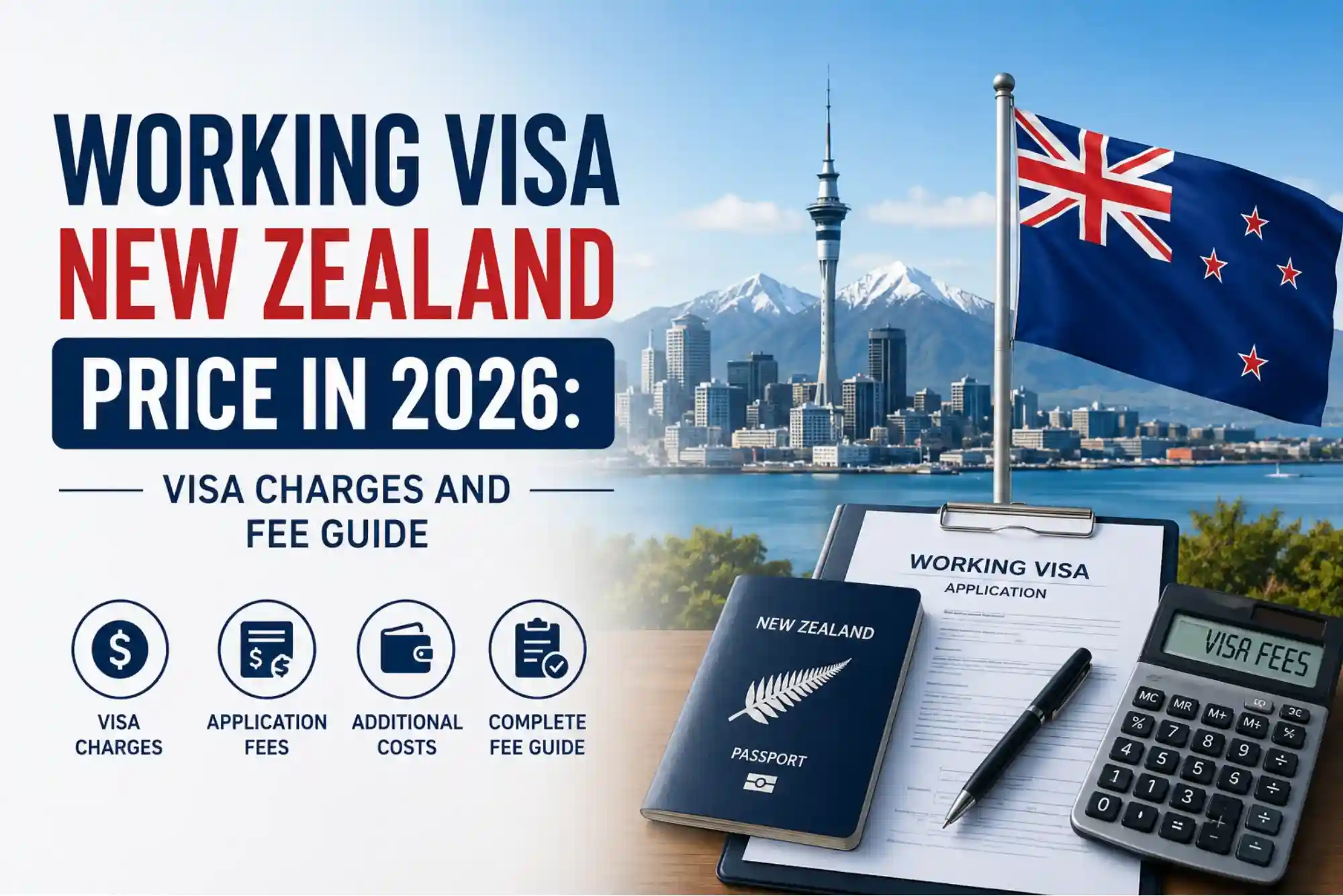

New Zealand continues to attract skilled professionals, seasonal workers, healthcare specialists, IT experts, and international job seekers looking for better career opportunities and quality of life. Before starting the application process, one of the most important things applicants want to understand is the total working visa cost.
This detailed guide explains the latest New Zealand work visa fees in 2026, additional charges you should expect, and a historical fee breakdown from 2014 to 2026 to help applicants understand pricing trends before planning their move.
Understanding New Zealand Working Visa Categories
New Zealand offers multiple work visa pathways depending on an applicant’s profession, qualifications, and employer sponsorship status. Visa fees can vary slightly depending on the category selected.
Common New Zealand Work Visa Types
- Accredited Employer Work Visa (AEWV)
- Specific Purpose Work Visa
- Post Study Work Visa
- Working Holiday Visa
- Skilled Migrant Category Visa
- Seasonal Work Visa
- Entrepreneur Work Visa
Among these, the Accredited Employer Work Visa is currently the most commonly used route for international workers entering New Zealand in 2026.
Working Visa New Zealand Price in 2026
The average government application fee for a standard New Zealand work visa in 2026 ranges between NZD 750 and NZD 1,250 depending on the visa category and application location.


Additional costs may include medical examinations, police certificates, translation services, document verification, and immigration adviser charges if professional assistance is used.
Estimated Total Cost Breakdown in 2026
| Expense Type | Estimated Cost (NZD) |
|---|---|
| Work Visa Application Fee | 750 – 1,250 |
| Medical Examination | 200 – 450 |
| Police Clearance Certificate | 25 – 100 |
| Document Translation | 50 – 250 |
| Biometric or VAC Charges | 40 – 120 |
| Immigration Adviser (Optional) | 500 – 3,000 |
| Total Estimated Cost | 1,100 – 5,000+ |
Applicants applying independently without consultants may only need to pay the direct government and documentation charges.
Working Visa New Zealand Price History (2014–2026)
New Zealand immigration fees have changed gradually over the years due to inflation adjustments, policy reforms, and operational updates. The following table provides an estimated historical overview of average work visa application fees from 2014 to 2026.
| Year | Estimated Average Work Visa Fee (NZD) |
|---|---|
| 2014 | 230 |
| 2015 | 240 |
| 2016 | 250 |
| 2017 | 270 |
| 2018 | 298 |
| 2019 | 310 |
| 2020 | 350 |
| 2021 | 410 |
| 2022 | 495 |
| 2023 | 540 |
| 2024 | 670 |
| 2025 | 720 |
| 2026 | 750 – 1,250 |
The noticeable rise after 2022 reflects changes introduced under the Accredited Employer Work Visa system and broader immigration reforms.
Factors That Affect New Zealand Work Visa Costs
1. Visa Category
Highly specialized visa categories usually have higher processing charges compared to temporary or seasonal work permits.
2. Country of Application
Visa Application Centre (VAC) charges vary depending on the applicant’s country. Some locations include courier services and biometric fees.
3. Medical Requirements
Applicants staying longer or working in healthcare-related fields may need comprehensive medical examinations and chest X-rays.
4. Immigration Assistance
Hiring licensed immigration advisers or lawyers significantly increases the total cost but may improve application preparation and accuracy.
5. Translation and Verification
Documents not issued in English often require certified translation and notarization before submission.
How Long Does a New Zealand Work Visa Take?
Processing times vary based on visa type, employer verification, and immigration workload. In 2026, most standard work visas are processed within:
- 2 to 6 weeks for straightforward applications
- 6 to 12 weeks for employer-assisted categories
- Longer for incomplete or high-risk applications
Applicants should ensure all supporting documents are complete before submission to avoid unnecessary delays.
Who Can Apply for a New Zealand Work Visa?
New Zealand welcomes applicants from a wide range of professions and skill categories. Skilled workers in healthcare, engineering, agriculture, construction, hospitality, education, and information technology often have strong employment opportunities.
To qualify, applicants generally need:
- A valid passport
- A genuine job offer from an approved employer
- Relevant qualifications or experience
- Medical clearance
- Police clearance certificate
- Proof of sufficient financial support if required
Certain categories may also require proof of English language ability.
Can You Bring Family Members on a Work Visa?
Many New Zealand work visa categories allow applicants to include partners and dependent children. However, separate visa applications and additional fees usually apply.
Family-related expenses may include:
- Partner visa fees
- Dependent child visa charges
- Additional medical examinations
- School enrollment expenses
- Health insurance costs
Families planning relocation should carefully calculate the full financial commitment before applying.
Tips to Reduce New Zealand Work Visa Expenses
Apply Without Unnecessary Agents
If your case is straightforward, applying directly through the official immigration process may save substantial consultancy fees.
Prepare Documents Early
Gathering medical reports, police clearances, and educational documents in advance can prevent costly delays.
Choose Accredited Employers Carefully
Employers already approved under the Accredited Employer Work Visa system usually help streamline the process.
Check Updated Fee Policies
Immigration fees occasionally change during the year. Reviewing current fee schedules before payment is important.
You can also compare broader immigration pricing trends through guides like
New Zealand visa price updates
and international application comparisons such as
Australia visa charges in 2026.
Common Reasons Work Visa Applications Get Rejected
Understanding common rejection factors can help applicants avoid expensive reapplications.
- Incomplete documentation
- Insufficient proof of qualifications
- Unverified employment offers
- Medical inadmissibility
- Character or police clearance concerns
- Providing inaccurate information
Applicants should carefully review immigration requirements before submitting their files.
Is New Zealand Worth the Work Visa Cost?
For many professionals, the answer is yes. New Zealand offers competitive salaries, excellent work-life balance, a stable economy, and long-term residency pathways for skilled migrants.
Although visa fees have increased compared to previous years, many applicants view the investment as worthwhile due to the country’s quality of life and employment opportunities.
Those comparing immigration pathways may also review similar fee structures such as
Saudi Arabia work visa costs
or broader global immigration fee trends covered on
Travel Earths.
Final Thoughts
The Working Visa New Zealand Price in 2026 depends on your visa type, country of application, supporting documentation, and optional professional assistance. While direct government fees generally range from NZD 750 to NZD 1,250, the complete process may cost considerably more once medical examinations, translations, and family applications are included.
Careful planning, early preparation, and understanding the full fee structure can help applicants avoid surprises and improve their chances of a successful application. Whether you are a skilled worker, recent graduate, or experienced professional seeking overseas opportunities, New Zealand remains one of the most attractive destinations for international employment in 2026.