
Travel demand for Thailand continues to grow in 2026, especially among tourists, digital nomads, business travelers, and long-term visitors looking for affordable Southeast Asian destinations. One of the most common questions travelers ask before planning a trip is how much a Thai visa actually costs and what additional expenses may apply during the application process.
The Thai visa price in 2026 depends on several factors, including visa type, nationality, application location, processing speed, and whether the traveler applies online, through an embassy, or via visa on arrival services. Beyond the basic visa fee, applicants may also need to pay for service charges, insurance, document preparation, biometrics, or expedited processing.
This guide explains the latest Thailand visa fees, estimated total costs, common additional charges, and the factors that can affect your overall travel budget.
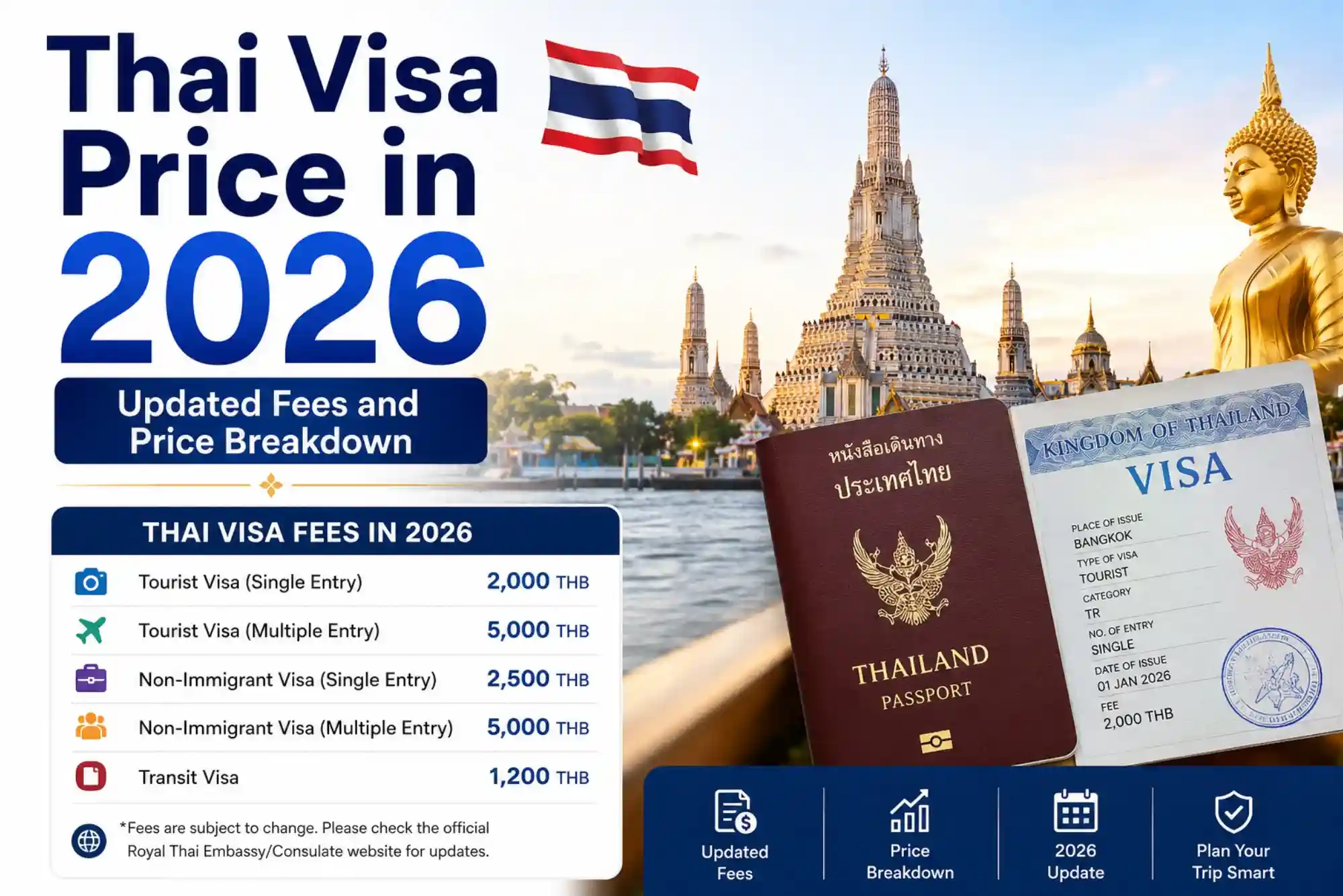
Thailand Visa Types and Estimated Fees in 2026
Thailand offers multiple visa categories for tourists, business visitors, students, retirees, and long-term travelers. Costs vary depending on validity duration and entry permissions.
| Visa Type | Typical Validity | Estimated Fee Range |
|---|---|---|
| Tourist Visa (Single Entry) | 30 to 60 Days | $30 to $60 |
| Tourist Visa (Multiple Entry) | 6 Months | $150 to $250 |
| Visa on Arrival | 15 Days | $50 to $70 |
| Business Visa | 90 Days+ | $80 to $200 |
| Student Visa | Varies | $70 to $150 |
| Retirement Visa | 1 Year | $150 to $300 |
| Elite or Long-Term Residence Programs | 5 to 20 Years | Varies Significantly |
Fees may change based on embassy policies, currency exchange rates, and local processing regulations. Travelers should always verify updated requirements through official Thai immigration channels before submitting an application.
Tourist Visa Cost Breakdown for Thailand
The standard tourist visa remains the most popular option for international travelers visiting Thailand in 2026. While the government application fee is usually manageable, additional costs can increase the final amount considerably.


| Expense Category | Estimated Cost |
|---|---|
| Visa Application Fee | $30 to $60 |
| Service Center Charges | $10 to $40 |
| Travel Insurance | $20 to $100 |
| Document Printing & Photos | $5 to $20 |
| Priority Processing | $25 to $80 |
| Bank Statement Preparation | Varies |
| Total Estimated Cost | $70 to $250+ |
Applicants using travel agencies or third-party visa services may pay higher processing fees. Premium services usually include appointment booking assistance, document review, and faster submission handling.
Visa on Arrival Thailand Price in 2026
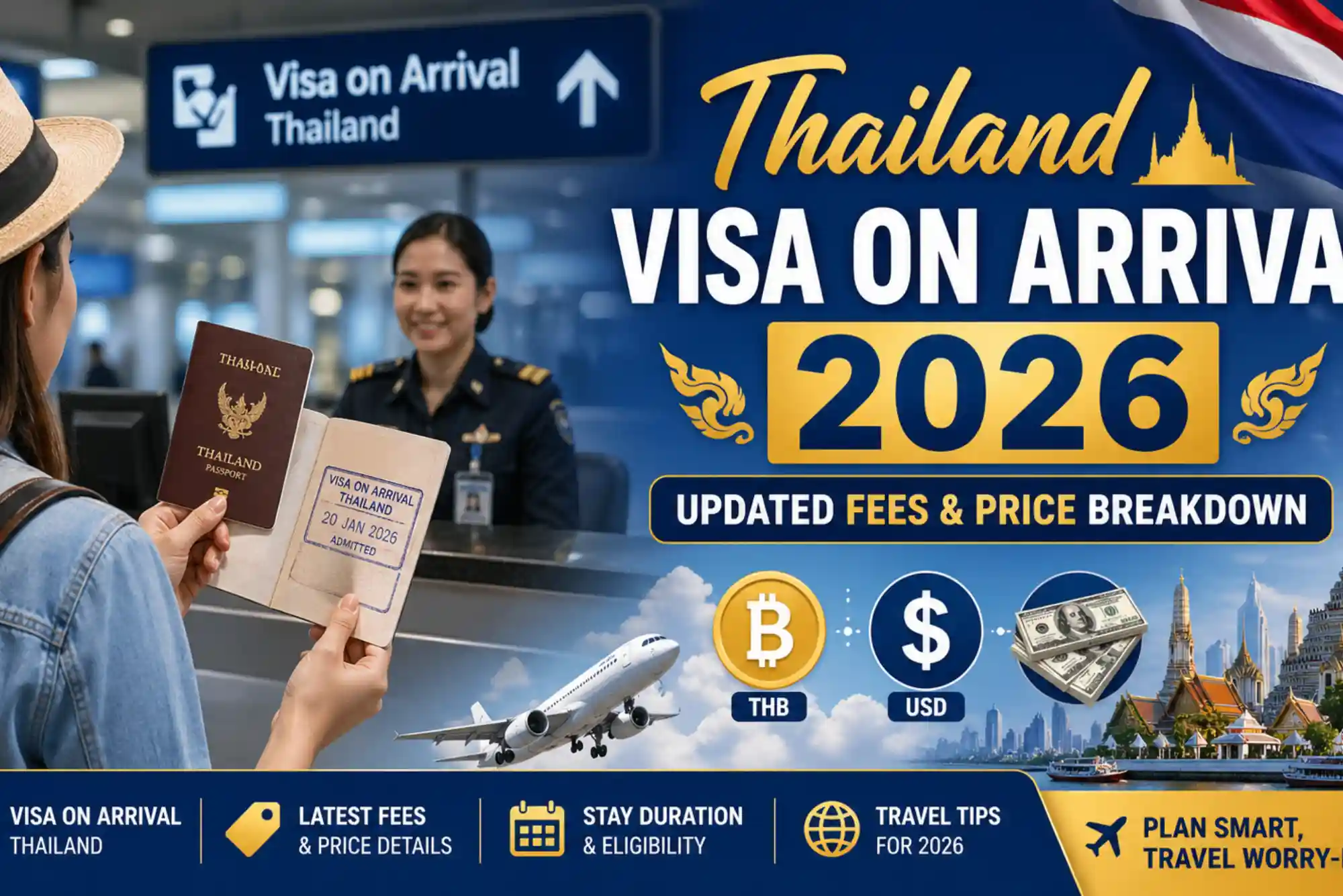
Thailand continues to provide visa on arrival access for eligible nationalities in 2026. This option is commonly used by short-term travelers and tourists visiting for brief vacations.
The visa on arrival fee is generally higher than some pre-approved tourist visas because it includes airport processing costs and rapid entry approval. Travelers should also prepare supporting documents before arrival.
- Valid passport with sufficient validity
- Confirmed return ticket
- Hotel booking confirmation
- Proof of financial support
- Passport-sized photographs
Travelers comparing Southeast Asian visa costs may also find it useful to read about the Vietnam visa on arrival pricing structure, which follows a somewhat similar short-term travel model.
What Factors Affect Thai Visa Price in 2026?
Not every traveler pays the same amount for a Thailand visa. Final expenses depend on multiple variables that influence processing requirements and administrative costs.
Nationality
Visa fees and eligibility rules differ between countries. Some travelers may qualify for visa exemptions, while others must complete a full embassy application process.
Visa Duration
Longer validity periods usually come with higher government charges and stricter financial documentation requirements.
Single vs Multiple Entry
Multiple-entry visas are more expensive because they allow repeated entry into Thailand during the visa validity period.
Processing Speed
Standard processing generally costs less than express or priority services. Urgent applications can significantly increase overall expenses.
Application Method
Applying directly through an embassy is often cheaper than using commercial visa agencies or concierge services.
Thailand E-Visa Fees and Online Processing
Thailand’s e-visa system has expanded in recent years, making online applications more convenient for many travelers. The online process reduces paperwork and embassy visits, although service fees may still apply.
Most e-visa applicants are required to upload:
- Passport scans
- Photographs
- Flight confirmations
- Accommodation details
- Financial documents
Some applicants may also need to provide employment records or sponsorship documentation depending on the visa category.
According to many travel advisory resources, online processing times can vary between a few business days and several weeks depending on application volume and embassy workload. [Insert relevant reference link here]
Additional Costs Travelers Often Overlook
Many travelers focus only on the official visa fee and forget the smaller supporting expenses that can increase the final budget. These extra costs are especially common for long-term stays or applications submitted through agencies.
| Additional Expense | Why It May Be Required |
|---|---|
| Travel Insurance | Mandatory for some visa categories |
| Translation Services | Required for non-English documents |
| Courier Fees | Passport return or embassy mailing |
| Bank Certification | Financial proof validation |
| Visa Extension Fees | Longer stays inside Thailand |
| Overstay Penalties | Fines for exceeding visa validity |
Travelers planning longer regional trips often compare visa expenses across nearby destinations. Those exploring multiple Asian travel routes may also want to review the South Korea visa fee guide for broader budgeting insights.
How to Apply for a Thailand Visa in 2026
The visa application process is usually straightforward when documents are prepared correctly in advance.
- Select the correct visa category based on your travel purpose.
- Check eligibility requirements through the Thai embassy or immigration portal.
- Prepare supporting documents and passport photographs.
- Complete the visa application form online or manually.
- Pay the required government and service fees.
- Attend biometrics or embassy appointments if required.
- Track application status until approval.
Applicants should double-check all information before submission because corrections or reapplications can increase costs and delay approval.
Common Reasons for Visa Delays or Extra Charges
Incomplete documentation remains one of the biggest reasons travelers face delays or additional expenses during the Thailand visa process.
- Incorrect passport validity
- Missing financial documents
- Unclear travel itinerary
- Invalid hotel reservations
- Low-quality passport photographs
- Late application submissions
Using professional document preparation services may reduce these risks, although it usually increases total application costs.
Thailand Long-Term Visa and Residency Costs
Thailand has become increasingly attractive for retirees, investors, remote workers, and high-income foreign residents. Long-term visa categories generally cost more than tourist visas because they involve stricter eligibility screening and additional financial requirements.
Programs such as retirement visas and elite residency memberships may include:
- Background verification
- Medical insurance requirements
- Income verification
- Bank deposit requirements
- Annual renewals
Travelers researching premium long-stay options may also be interested in the Thailand golden visa pricing guide, which explains high-value residency pathways in greater detail.
Thailand Visa Costs Compared to Other Destinations
Thailand remains one of the more affordable travel destinations in Asia, especially for short-term tourism. Even after adding service fees and insurance costs, the overall visa expense is often lower than many Western countries.
For comparison, visa applications for countries like the United Kingdom, Canada, and the United States usually involve higher government fees, biometrics costs, and stricter documentation procedures.
Travelers comparing international visa budgets can also explore the Canada visitor visa cost guide to understand how pricing structures differ between destinations.
Tips to Reduce Thailand Visa Expenses
Smart planning can help travelers avoid unnecessary fees and reduce the overall cost of obtaining a Thai visa.
- Apply early to avoid priority processing charges
- Use official embassy channels when possible
- Double-check document requirements before submission
- Avoid unnecessary agency services
- Maintain valid travel insurance coverage
- Keep digital copies of all documents
Budget-conscious travelers should also monitor exchange rate fluctuations because embassy fees are often adjusted according to local currency values.
Frequently Asked Questions
How much is a Thailand tourist visa in 2026?
The average Thailand tourist visa fee in 2026 ranges from approximately $30 to $60 for standard single-entry applications, although additional service charges may apply.
Is Thailand visa on arrival free in 2026?
Visa on arrival is generally not free for most eligible travelers. Fees usually range between $50 and $70 depending on processing location and currency conversion.
Can Thailand visa fees change during the year?
Yes, visa fees may change due to embassy policy updates, currency fluctuations, or revised immigration regulations.
Do I need travel insurance for a Thai visa?
Some visa categories may require valid travel or medical insurance coverage, particularly for long-term stays or retirement programs.
How long does Thailand visa processing take?
Processing times vary by country and visa type, but most standard applications are completed within several business days to a few weeks.
Conclusion
The Thai visa price in 2026 depends largely on the type of visa, application method, processing speed, and additional supporting requirements. While standard tourist visas remain relatively affordable, travelers should still account for service fees, insurance costs, documentation expenses, and possible premium processing charges when budgeting for their trip.
Careful planning, accurate paperwork, and early applications can help reduce unnecessary expenses and make the Thailand visa process smoother. Whether visiting for tourism, business, study, or long-term residency, understanding the full cost structure in advance helps travelers avoid surprises and prepare confidently for their journey.