
International travel continues to grow in 2026, and visa costs remain one of the most important expenses travelers need to plan before booking flights or accommodation. Different countries apply different pricing structures depending on visa type, nationality, processing speed, and duration of stay. Understanding the latest visa charges can help travelers avoid unexpected costs and prepare accurate travel budgets.
The all country visa price list in 2026 includes tourist visas, business visas, student permits, work visas, transit visas, and long-term residency categories. While some countries offer affordable electronic visas, others require embassy appointments, biometrics, insurance, medical tests, or premium processing charges that significantly increase the total cost.
Travelers comparing destinations often review region-specific visa pricing before making plans. Those interested in Middle East travel can also explore the latest Dubai visa pricing guide for 2026 for a detailed breakdown of UAE-related charges.
Average Visa Prices Around the World in 2026
Visa fees vary widely based on immigration policies, diplomatic agreements, and processing systems. Countries with electronic application systems often provide lower-cost and faster processing options compared to embassy-based applications.
| Visa Type | Typical Price Range (USD) | Processing Time |
|---|---|---|
| Tourist Visa | $20 – $200 | 2 Days – 6 Weeks |
| Business Visa | $50 – $350 | 5 Days – 8 Weeks |
| Student Visa | $100 – $700 | 2 Weeks – 3 Months |
| Work Visa | $150 – $2,500+ | 1 Month – 6 Months |
| Transit Visa | $10 – $80 | 24 Hours – 10 Days |
| Permanent Residency Application | $500 – $5,000+ | Several Months |
Prices shown above are estimated global averages and can vary depending on nationality, embassy location, exchange rates, and immigration policy changes.
Popular Country Visa Fees in 2026
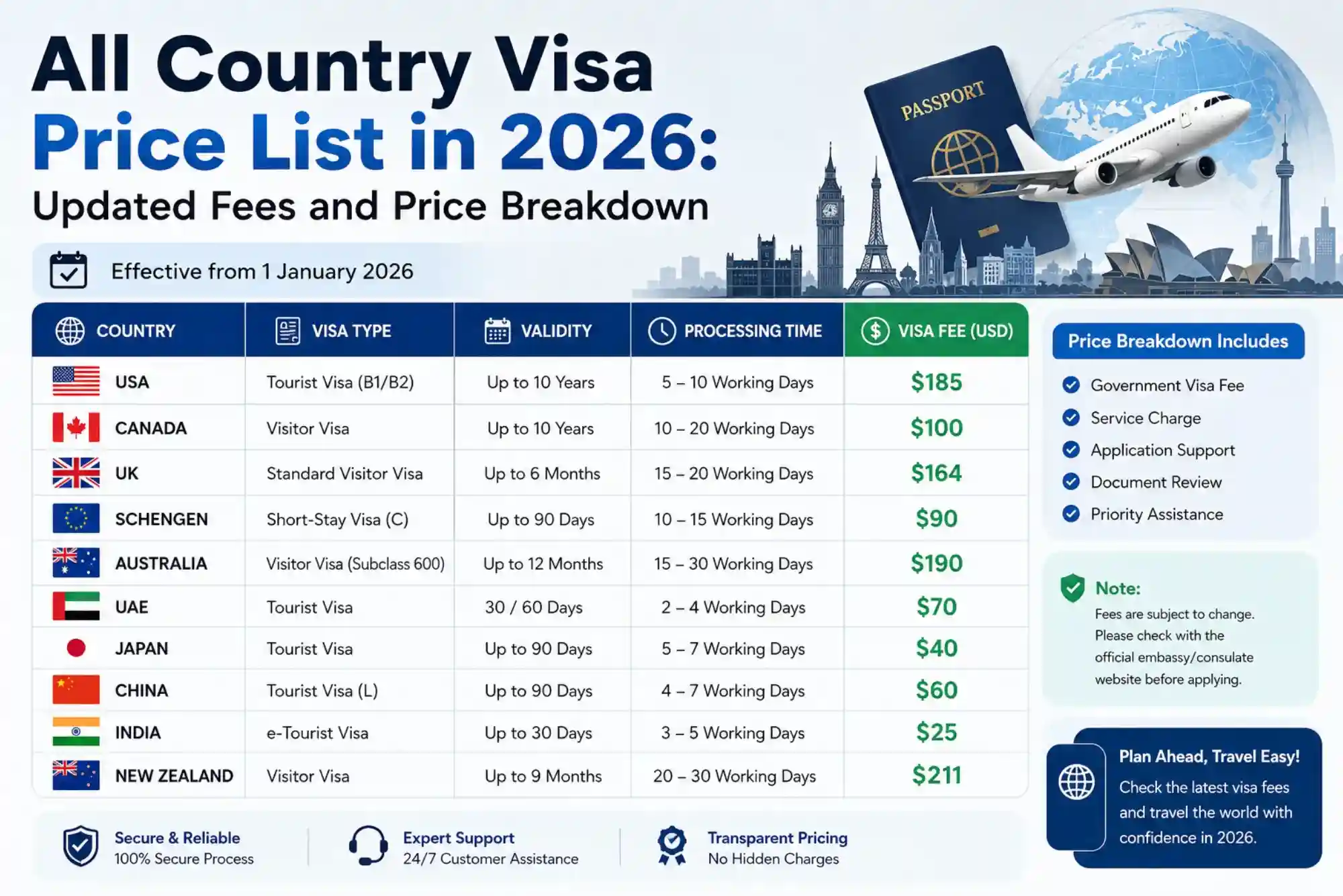
Several destinations continue to dominate global travel demand in 2026. Countries such as the United States, United Kingdom, Canada, UAE, Saudi Arabia, Thailand, and Australia have updated their visa fee structures to reflect rising administrative and security costs.


| Country | Common Visa Type | Estimated Fee Range | Additional Charges |
|---|---|---|---|
| United States | B1/B2 Tourist Visa | $185 – $245 | Interview and document costs |
| United Kingdom | Standard Visitor Visa | $145 – $180 | Biometrics and priority service |
| Canada | Visitor Visa | $100 – $185 | Biometrics fee |
| Australia | Tourist Visa | $130 – $250 | Medical examinations |
| UAE | Visit Visa | $90 – $350 | Insurance and service fees |
| Saudi Arabia | Visit Visa | $120 – $300 | Insurance charges |
| Thailand | Tourist Visa | $35 – $120 | Express processing fees |
| Turkey | eVisa | $20 – $80 | Nationality-based pricing |
Travelers looking for country-specific pricing details can review the latest USA visa fee guide for updated tourist and visitor visa costs.
What Is Included in Visa Costs?
Many travelers assume the listed visa fee is the total amount they need to pay. In reality, visa applications often include several separate charges that increase the overall cost significantly.
Common visa-related expenses include:
- Government application fee
- Embassy processing charges
- Visa service center fee
- Biometric enrollment charges
- Medical examination costs
- Travel insurance requirements
- Document translation expenses
- Priority or express processing fees
- Courier and passport return charges
Applicants should also consider hidden costs such as transportation to embassies, accommodation near visa centers, and document notarization expenses.
Tourist Visa Prices in 2026
Tourist visas remain the most commonly requested travel permits globally. Many countries now use online visa systems that simplify applications and reduce embassy visits.
Electronic visas are generally cheaper and faster than traditional sticker visas. Southeast Asian countries and some Middle Eastern destinations continue expanding digital visa programs to attract tourism.
Thailand remains one of the most searched travel destinations for budget travelers. The updated Thailand visa price breakdown for 2026 explains tourist visa categories, extension fees, and processing options in detail.
Factors That Affect Tourist Visa Fees
Tourist visa pricing is influenced by several important factors:
- Single-entry or multiple-entry access
- Visa validity period
- Length of permitted stay
- Nationality of applicant
- Urgent processing requests
- Reciprocity agreements between countries
Some countries also apply seasonal pricing adjustments during peak travel periods.
Work Visa Costs by Country
Work visas are usually more expensive than tourist visas because they require employer sponsorship, background verification, labor approvals, and extended documentation reviews.
Countries experiencing labor shortages have introduced simplified work visa programs in 2026, although fees remain relatively high compared to short-term travel visas.
| Country | Work Visa Category | Estimated Cost |
|---|---|---|
| New Zealand | Skilled Worker Visa | $400 – $1,200 |
| Saudi Arabia | Employment Visa | $300 – $1,000 |
| Australia | Temporary Skill Visa | $700 – $2,500 |
| Canada | Work Permit | $155 – $500 |
| United Kingdom | Skilled Worker Visa | $900 – $2,000+ |
For travelers planning overseas employment, the detailed New Zealand work visa fee guide provides useful information on processing fees, sponsorship costs, and application requirements.
Student Visa Fees and Education-Related Costs
Student visas often involve more than just application fees. Educational institutions may require proof of financial support, medical insurance, tuition deposits, and language test certificates.
Countries such as Australia, Canada, the UK, and the USA remain among the most expensive destinations for international students due to additional compliance requirements.
Typical student visa expenses may include:
- Visa application fee
- Biometrics appointment fee
- Health insurance
- Medical screening
- English language testing
- Document verification
- Student registration charges
Many universities also recommend applying several months early because visa processing timelines can increase during peak admission seasons.
Visa on Arrival and eVisa Pricing Trends
Visa-on-arrival systems continue expanding in 2026, especially in Asia, Africa, and parts of the Middle East. These visas are typically cheaper and faster to obtain than embassy-issued permits.
However, travelers should always confirm eligibility before departure because visa-on-arrival access depends heavily on passport nationality.
Popular eVisa and visa-on-arrival destinations include:
- Vietnam
- Thailand
- Kenya
- Turkey
- Tanzania
- Bahrain
Official immigration portals remain the safest source for updated policy information and application procedures. [Insert relevant reference link here]
Why Visa Prices Increase Every Year
Visa prices rarely remain fixed for long periods. Governments review immigration fees regularly to manage administrative expenses, border security systems, digital infrastructure, and inflation-related operational costs.
Several reasons contribute to annual visa fee increases:
- Rising biometric technology expenses
- Enhanced immigration security checks
- Currency exchange fluctuations
- Higher embassy operating costs
- Expansion of online processing systems
- Reciprocal fee adjustments between countries
Premium processing services have also become increasingly common, allowing applicants to pay additional fees for faster approvals.
Tips to Reduce Total Visa Costs
Visa expenses can quickly become expensive, especially for families or long-term travelers. Careful planning helps reduce unnecessary spending and application mistakes.
- Apply early to avoid urgent processing fees.
- Use official government portals whenever possible.
- Double-check document requirements before submission.
- Compare visa types carefully before applying.
- Purchase insurance only from approved providers.
- Avoid third-party agents unless necessary.
Travelers should also monitor exchange rates because visa payments are often processed in local embassy currencies.
Common Visa Application Mistakes
Even small errors can delay visa approvals or increase total application costs. Many applicants end up paying additional service charges because of incomplete documentation or incorrect submissions.
The most common visa application mistakes include:
- Using expired passport copies
- Uploading incorrect photograph sizes
- Entering inconsistent travel dates
- Providing inaccurate financial documents
- Missing insurance requirements
- Ignoring minimum passport validity rules
Checking embassy instructions carefully before payment can prevent unnecessary delays and reapplication costs.
Frequently Asked Questions
Which country has the cheapest tourist visa in 2026?
Several Southeast Asian and African countries offer low-cost eVisas and visa-on-arrival programs ranging from approximately $20 to $50 depending on nationality and duration.
Are visa fees refundable after rejection?
Most countries do not refund visa application fees after rejection because processing work has already been completed by immigration authorities.
Do children pay full visa fees?
Some countries offer reduced fees for minors, while others charge standard application prices regardless of age.
Can visa fees change during the year?
Yes. Immigration departments can revise visa prices at any time based on policy changes, inflation, or updated diplomatic agreements.
Is travel insurance included in visa fees?
Usually not. Many countries require separate insurance purchases that are paid independently from visa application charges.
Conclusion
The all country visa price list in 2026 reflects the growing complexity of global travel requirements. While some destinations continue offering affordable electronic visas, others involve multiple processing charges, biometrics, insurance costs, and premium service fees that significantly affect total travel budgets.
Understanding visa costs before applying helps travelers avoid surprises and plan international trips more efficiently. Since visa policies change regularly, applicants should always verify the latest embassy guidelines, processing timelines, and supporting document requirements before submitting applications.