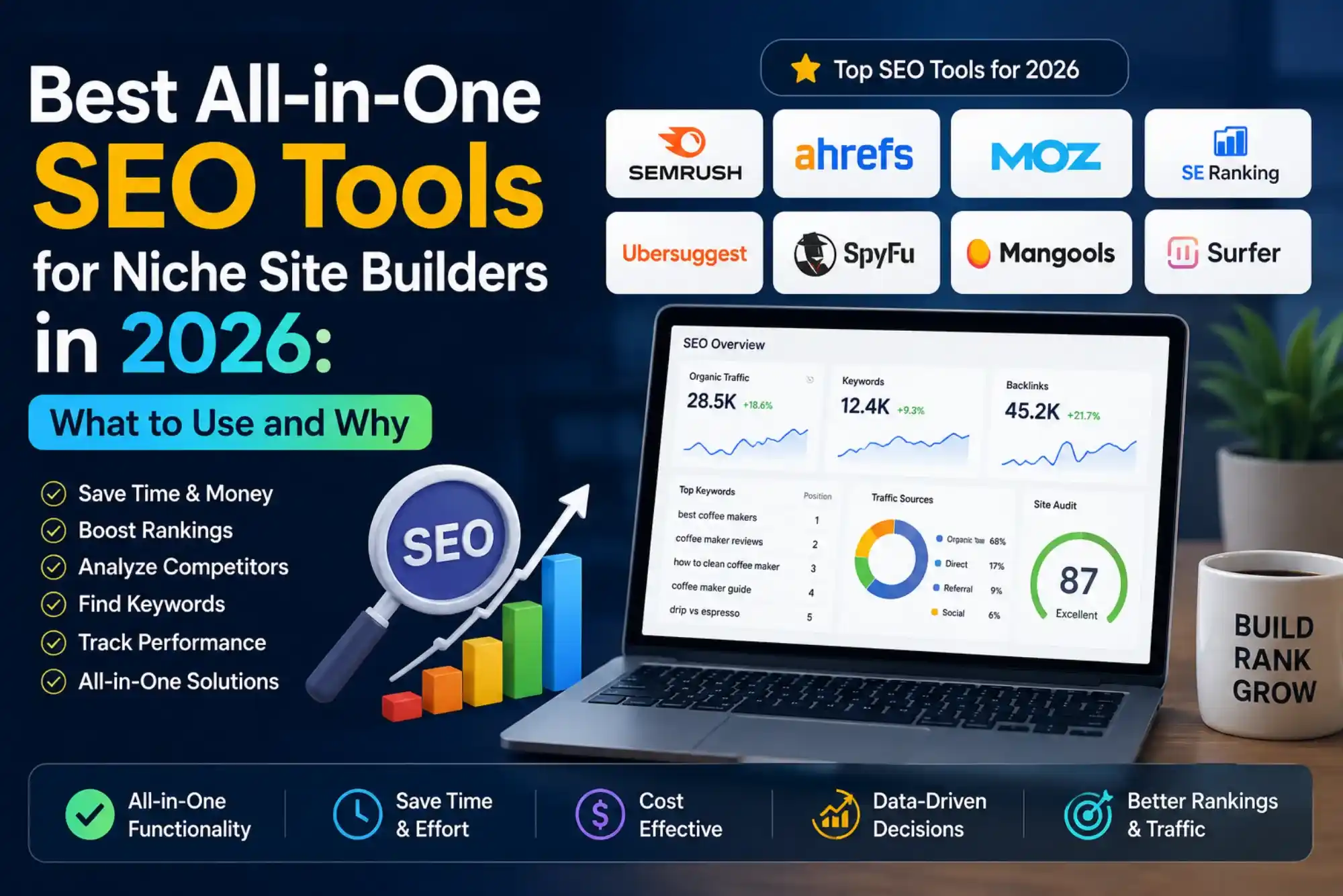
Building a successful niche website in 2026 no longer requires enterprise-level software or massive monthly subscriptions. Many independent publishers, affiliate marketers, and small content teams are growing steady organic traffic using affordable SEO tools that focus on practicality rather than overwhelming feature lists.
The challenge is no longer finding SEO software. The real difficulty is choosing tools that actually help with keyword research, content optimization, technical audits, and ranking improvements without draining a limited budget. A smart SEO stack today is lean, efficient, and designed around measurable results.
For niche site builders, affordable SEO tools usually combine essential features like keyword tracking, SERP analysis, competitor insights, content planning, and technical monitoring while keeping monthly costs manageable. The best options reduce manual work and help publishers focus on publishing useful content consistently.
Why Budget-Friendly SEO Tools Matter More in 2026
Search competition has become more aggressive across nearly every niche. AI-assisted publishing, topical authority strategies, and advanced competitor analysis are now common even among smaller publishers. At the same time, many niche site owners are operating with limited resources and cannot justify paying hundreds of dollars per month for premium SEO platforms.
Affordable SEO tools help bridge that gap. Instead of paying for features that rarely get used, site builders can focus on the core functions that directly impact rankings and organic traffic growth.
Most successful niche publishers now prioritize:
- Reliable keyword discovery
- Search intent analysis
- Content optimization workflows
- Basic technical SEO monitoring
- Internal linking management
- Competitor content research
- Rank tracking for priority pages
Many site owners also combine multiple lightweight tools instead of relying on one expensive all-in-one platform.
What Makes an SEO Tool Worth Paying For?
Not every inexpensive SEO tool provides good value. Some low-cost platforms offer incomplete data, outdated keyword metrics, or inaccurate rank tracking. A useful SEO tool should save time, improve decisions, and support scalable content production.
Before subscribing to any platform, niche site builders should evaluate several important factors.
| Feature | Why It Matters |
|---|---|
| Keyword Research | Helps identify low-competition opportunities with ranking potential |
| Content Optimization | Improves topical coverage and on-page relevance |
| Rank Tracking | Measures progress and identifies traffic trends |
| Technical SEO | Detects crawl errors, broken links, and indexing issues |
| Competitor Analysis | Shows what content already performs well in the niche |
| Ease of Use | Reduces learning time and workflow complexity |
| Pricing Flexibility | Allows smaller publishers to scale gradually |
Many newer publishers make the mistake of overpaying for advanced enterprise features before their sites generate meaningful traffic or revenue. Starting with a practical setup usually delivers a better return on investment.
Affordable SEO Tool Categories That Actually Help Niche Sites
Different tools solve different SEO problems. Instead of focusing on brand names alone, niche publishers should understand which categories matter most for long-term growth.
Keyword Research Tools
Keyword research remains the foundation of niche SEO. Finding topics with realistic ranking potential is often more valuable than publishing large amounts of unfocused content.
Modern keyword tools help publishers identify:
- Long-tail search opportunities
- Low-authority ranking gaps
- Question-based search intent
- Content clusters
- Trending topics
- Seasonal search patterns
Many site owners searching for affordable solutions also benefit from reviewing dedicated resources on keyword research tools for niche site builders to better understand which features matter most for smaller websites.
Content Optimization Platforms
Publishing articles without optimization is increasingly risky in competitive search results. Content optimization tools now assist writers by analyzing search intent, semantic relevance, heading structure, readability, and topical completeness.
The best affordable options provide actionable recommendations instead of overwhelming users with unnecessary scoring systems.
Effective content tools often help with:
- Semantic keyword suggestions
- Heading improvements
- Topic coverage analysis
- Internal linking opportunities
- Readability adjustments
- Search intent alignment
Technical SEO Monitoring Tools
Technical SEO problems can quietly limit organic growth. Crawl errors, duplicate content, slow-loading pages, and indexing issues are common on expanding niche websites.
Affordable site audit tools help identify these problems before they affect rankings significantly. Even smaller publishers should monitor:
- Broken internal links
- Redirect chains
- Indexation issues
- Page speed problems
- Missing metadata
- Mobile usability errors
Many publishers also combine technical monitoring with broader optimization workflows similar to those discussed in SEO tools for niche site builders.
Balancing Free Tools and Paid SEO Software
One of the smartest strategies for budget-conscious niche builders is combining reliable free tools with carefully selected paid subscriptions.
Free platforms can handle a surprising amount of SEO work, especially during the early growth stages of a site. Paid tools become more valuable when scaling content operations, tracking larger keyword sets, or managing multiple websites.
| Tool Type | Best Use Case | Recommended Approach |
|---|---|---|
| Free SEO Tools | Beginner research and monitoring | Use daily for core insights |
| Budget Paid Tools | Content scaling and deeper analysis | Subscribe selectively |
| Premium Platforms | Agencies and large publishers | Avoid unless truly needed |
Many niche site owners overspend too early by purchasing enterprise-level subscriptions before validating their content strategy.
How AI Is Changing Affordable SEO Workflows
AI-assisted SEO tools have become much more practical in 2026. Instead of replacing human strategy, modern platforms are helping publishers speed up repetitive tasks while improving editorial efficiency.
Affordable AI-powered SEO platforms now assist with:
- Content briefs
- Topic clustering
- Search intent analysis
- Outline generation
- Internal link suggestions
- SERP pattern analysis
- Meta description optimization
However, relying entirely on AI-generated content without editorial oversight still creates quality risks. Search engines increasingly reward useful, experience-driven, and trustworthy content.
Site builders exploring automation and workflow efficiency may also find value in resources covering AI SEO tools for niche site growth.
Important Features Small Publishers Should Prioritize
Many SEO platforms advertise hundreds of features that smaller publishers rarely need. Practical site builders usually benefit more from simplicity and reliability than excessive functionality.
Several features consistently provide the highest value for smaller content websites.
Accurate Keyword Difficulty Data
Ranking opportunities often depend on finding search terms with achievable competition levels. Good keyword difficulty estimates help avoid wasting time targeting impossible queries.
Competitor Content Analysis
Understanding why competing pages rank well can reveal important gaps in topical coverage, formatting, and search intent alignment.
Content Planning Systems
Publishing consistently is easier with tools that organize clusters, topical maps, and publishing workflows.
Internal Linking Suggestions
Internal links help distribute authority across a website while improving crawlability and topical relationships. Automated suggestions can save considerable editing time.
Some publishers also improve workflow tracking using insights similar to those discussed in SEO reporting tools for niche publishers.
Common Mistakes When Choosing Cheap SEO Tools
Budget SEO software can be extremely useful, but poor tool selection often leads to wasted time and unreliable data.
Several mistakes appear repeatedly among newer niche site owners.
Buying Multiple Overlapping Tools
Many publishers subscribe to several platforms that perform nearly identical tasks. This creates unnecessary monthly costs without improving SEO performance.
Ignoring Data Accuracy
Low-quality keyword databases and unreliable search volume estimates can distort content planning decisions.
Paying for Features Never Used
Advanced automation systems, API integrations, and agency reporting features are rarely necessary for single-site publishers.
Choosing Complexity Over Workflow Efficiency
A simpler tool that supports consistent publishing often produces better long-term results than a complicated platform filled with advanced settings.
Practical SEO Stack for a Small Niche Website
A practical SEO setup in 2026 does not need to be expensive. Many profitable publishers operate with a streamlined combination of tools and manual processes.
A balanced low-cost SEO workflow often includes:
| SEO Task | Recommended Approach |
|---|---|
| Keyword Research | Use affordable keyword discovery software |
| Content Planning | Organize clusters in spreadsheets or lightweight planning tools |
| Optimization | Use AI-assisted content optimization selectively |
| Technical Audits | Run monthly crawl checks |
| Rank Monitoring | Track only priority keywords |
| Internal Linking | Audit content relationships regularly |
This approach keeps costs manageable while still supporting scalable organic growth.
How Search Intent Shapes SEO Tool Selection
Search intent has become central to modern SEO strategy. Tools that help identify whether users want information, comparisons, reviews, or transactional pages are increasingly valuable.
Niche publishers targeting informational traffic often need strong content optimization and topical research features. Affiliate-focused websites may prioritize SERP analysis, competitor monitoring, and commercial keyword tracking.
Understanding intent helps site builders avoid producing content that fails to match what search engines already reward.
For broader strategy references, many publishers also review industry resources such as [Insert relevant reference link here] when evaluating evolving SEO workflows and ranking trends.
The Real Value of Affordable SEO Tools
The best affordable SEO tools are not necessarily the cheapest. Their real value comes from helping publishers make smarter content decisions, identify realistic ranking opportunities, and maintain consistent optimization processes.
Successful niche site growth usually depends more on strategic execution than expensive software subscriptions. Publishers who focus on search intent, topical authority, content quality, and technical consistency often outperform competitors relying solely on costly SEO platforms.
Affordable SEO tools for niche site builders in 2026 are increasingly capable, practical, and accessible. With the right combination of keyword research, optimization, and technical monitoring tools, smaller publishers can compete effectively without enterprise-sized budgets.
Long-term SEO success still comes down to publishing useful content consistently, understanding user intent, and improving site quality over time. Smart tools simply make that process more efficient.