
This guide covers every major UK visa category, breaks down all the fees that apply beyond the government charge, and walks through the application process step by step. Whether you are a first-time tourist or a company managing international talent, the numbers you need are here.
If you are budgeting for visa costs across multiple destinations, our international travel price guides cover the full cost picture for popular destinations across the Middle East, Africa, and beyond.
The Home Office’s updated fee schedule came into effect on 8 April 2026, raising nearly every visa and immigration charge by 6–7%. The fees shown throughout this article reflect the post-April 2026 figures. If you submitted your application before 8 April, your fee was calculated at the previous rate. Always verify the current amount on the official GOV.UK website on the day you submit — discrepancies can cause rejection or delays.
How the UK Visa Price System Works
UK visa fees are set by the Home Office through UK Visas and Immigration (UKVI) and apply globally regardless of which country you are applying from. The government fee covers the cost of processing your application — reviewing evidence, making a decision, and producing your visa — but it is rarely the only cost you will pay.
Your total outlay will typically include the UKVI government application fee, a biometric appointment fee at a Visa Application Centre (VAC) operated by VFS Global or TLScontact, and in many cases the Immigration Health Surcharge (IHS) for longer-stay visas. Optional priority or super-priority services add further on top. Understanding this layered structure upfront prevents the common shock of a final bill considerably higher than the advertised government fee.
UK visa fees are non-refundable once submitted and biometrics have been given. This applies even if your application is refused, if your circumstances change, or if you decide not to travel. Pay only when you are fully prepared.
UK Standard Visitor Visa Price in 2026
The Standard Visitor Visa is the most widely applied-for UK visa type — used for tourism, family visits, business meetings, medical treatment, and short-term study. It allows a maximum stay of 6 months per visit and is available in four validity options, all granting the same 6-month maximum per trip.


These are the government fees payable to UKVI — they apply to all nationalities worldwide. The longer-validity options are worth considering carefully: a 10-year visa works out to approximately £105.90 per year compared to £270 per year if you buy a new 6-month visa twice annually. However, because fees are non-refundable, opting for a 10-year visa when your circumstances may change carries financial risk.
| Validity | Government Fee (£) | Max Stay Per Visit | Annual Cost (approx.) | Best For |
|---|---|---|---|---|
| 6 months | £135 | 6 months | £135–£270 | One-off or occasional visitors |
| 2 years | £475 | 6 months per visit | £237.50 | Frequent visitors (2–3× per year) |
| 5 years | £848 | 6 months per visit | £169.60 | Regular travellers with stable plans |
| 10 years | £1,059 | 6 months per visit | £105.90 | Frequent visitors, long-term savings |
UK Visitor Visa: Total Cost Including VFS and Additional Charges
The government fee is just the starting point. When you apply at a Visa Application Centre, several additional charges typically apply, and the exact amounts vary by country. Here is the full picture for three of the highest-volume applicant countries:
| Country | Govt. Fee (£) | VFS / VAC Service Fee (approx.) | Optional Extras (range) | Estimated Total (£) |
|---|---|---|---|---|
| Pakistan | £135 | ~£9–£15 | Courier, scan, SMS: £20–£40 | ~£144–£190 |
| India | £135 | ~£12–£27 | Courier, scan, SMS: £20–£40 | ~£147–£202 |
| Nigeria | £135 | ~£17–£36 | Courier, scan, SMS: £20–£40 | ~£152–£211 |
| UAE / GCC | £135 | ~£10–£20 | Courier, scan: £15–£35 | ~£145–£190 |
| Note: VFS / VAC fees are set by local operators and subject to change. Verify amounts at your local application centre. | ||||
UK Work Visa Fees in 2026
Work visas represent the most significant upward cost movement in the April 2026 fee revision. The Skilled Worker visa — the main route for employers sponsoring overseas talent — saw its entry clearance fee rise to £819 for applications valid up to three years, and £1,865 for those exceeding three years. These figures do not include the Immigration Health Surcharge, which applies separately and represents an equally substantial cost.
| Visa Route | Up to 3 Years (£) | Over 3 Years (£) | Notes |
|---|---|---|---|
| Skilled Worker | £819 | £1,865 | IHS paid separately |
| Health and Care Worker | Lower tier (reduced) | Lower tier (reduced) | IHS exempt for some roles |
| Intra-Company Transfer | ~£819 | ~£1,865 | Same structure as Skilled Worker |
| Global Talent | ~£716 | — | Endorsement fee applies separately |
| Innovator Founder | ~£1,486 | ~£1,486 | IHS applies |
| Temporary Worker (various) | ~£298 | — | Up to 12 months |
| Fees are in GBP for out-of-country applications. In-country applications (extensions) may differ. Source: UKVI fee schedule, April 2026. | |||
Employer Sponsor Licence Costs
Before a company can sponsor a Skilled Worker, it must hold a UKVI sponsor licence. This is a separate, additional cost paid by the employer rather than the applicant. Small organisations pay one rate; large organisations and charities pay a higher rate. In 2026 the sponsor licence fee sits at approximately £536 (small/charitable) and £1,476 (large organisations). Sponsors also pay a fee for each Certificate of Sponsorship (CoS) issued. Companies relocating staff to the UK should factor these costs into total mobility budgets before making job offers.
For context on how visa and employment costs compare across regional destinations, including the UAE where many multinational teams operate, our Dubai visa price breakdown for 2026 provides a useful comparison point for HR and mobility teams.
UK Student Visa Cost in 2026
The Student visa — previously called the Tier 4 visa — allows international students to study at licensed UK educational institutions for the duration of their course. The government application fee is £490 for students applying from outside the UK. This applies to most degree, diploma, and language courses.
However, the government fee is a fraction of the true cost of a UK student visa. The Immigration Health Surcharge (IHS), paid upfront at the time of application, is charged at £776 per year for students (a reduced rate compared to the standard £1,035). For a three-year degree, that is £2,328 in IHS alone — paid before the student sets foot in the UK. Add the application fee, bank statement requirements (showing at least £12,006 in accessible funds for students studying outside London, more for London institutions), and the full cost picture becomes considerably larger than the visa fee alone suggests.
The Immigration Health Surcharge (IHS): What It Costs and Who Pays It
The Immigration Health Surcharge is one of the most frequently overlooked costs in UK visa planning — and one of the most significant. It applies to all visa types lasting more than 6 months, including work, study, and family visas. Standard Visitor Visa holders are exempt.
| Applicant Category | IHS Rate | 3-Year Total Example | Notes |
|---|---|---|---|
| Standard (most work / family visas) | £1,035 / year | £3,105 | Paid upfront with application |
| Students (Student visa) | £776 / year | £2,328 | Reduced rate for students |
| Youth Mobility Scheme | £776 / year | £1,552 (2 years) | Reduced rate |
| Standard Visitor Visa holders | £0 | — | Exempt — tourist stays only |
| Health and Care Worker (some roles) | £0 | — | IHS exempt for qualifying NHS roles |
| IHS is calculated per applicant, per year (or part year), and must be paid in full upfront. Dependants pay the same rate as the main applicant. | |||
The IHS payment is made through the UK Visa and Immigration application system and is processed before your application is submitted. Each dependant on the same application pays their own full IHS amount — a family of four on a three-year Skilled Worker visa would therefore face an IHS bill of approximately £12,420 before counting any other application costs.
Priority and Super-Priority Service Fees
Standard UK visa processing takes approximately three weeks. For applicants with fixed travel dates or urgent needs, UKVI offers faster decision services at an additional charge.
- Priority Service: Aims to deliver a decision within 5 working days — additional fee of approximately £500
- Super-Priority Service: Aims to deliver a decision within 1 working day — additional fee of approximately £1,000
These services are not always available in every country or for every visa type — availability is displayed during the online application process. Importantly, if UKVI fails to meet the priority decision timeline, the priority service fee may be refunded, but the underlying visa application fee is never returned regardless of outcome.
Applying close to your travel date forces a choice between expensive priority services and the risk of missing your departure. Aim to apply at least 6–8 weeks before travel to use standard processing comfortably — and to avoid a £500–£1,000 avoidable charge.
ETA vs. Visitor Visa: Which Do You Need?
From late 2023 through 2025, the UK introduced the Electronic Travel Authorisation (ETA) — a pre-travel permission required for nationals of many visa-exempt countries including the United States, Canada, Australia, and most EU states. The ETA costs £10 per applicant, is linked to your passport, and is valid for multiple trips over two years (or until your passport expires).
The ETA is not a visa — it is a pre-travel check for low-risk, visa-exempt nationalities. If you already require a full visitor visa (as most South Asian, African, and many Asian nationalities do), the ETA does not apply to you — you use your visitor visa instead. Understanding this distinction avoids applying for the wrong document entirely.
| Feature | ETA (Electronic Travel Auth.) | Standard Visitor Visa |
|---|---|---|
| Who needs it | Visa-exempt nationals (US, Canada, EU, etc.) | Non-exempt nationalities (Pakistan, India, Nigeria, etc.) |
| Cost | £10 | £135–£1,059 |
| Validity | 2 years / passport expiry | 6 months to 10 years |
| Max stay per visit | 6 months | 6 months |
| Application method | Online / UK ETA app | Online via UKVI + VAC appointment |
| Processing time | Usually within hours | ~3 weeks (standard) |
| Biometrics required | No | Yes (at VAC) |
Step-by-Step: How to Apply for a UK Visitor Visa in 2026
The application process runs entirely through the UK government’s online system. There is no option to apply by post or walk in to an embassy — biometrics are collected at a Visa Application Centre operated by VFS Global or TLScontact, depending on your country.
- Create a UKVI account: Go to gov.uk and begin your application through the official Access UK application portal. Use only the gov.uk domain — the Home Office does not accept direct bank transfers, and the payment screen within the official system is the only authorised payment route.
- Select the correct visa type and duration: Choose Standard Visitor Visa and select your preferred validity (6 months, 2 years, 5 years, or 10 years). Errors here mean paying the wrong fee and potentially needing to reapply.
- Complete the application form: Enter personal details, travel history, employment information, and the purpose of your visit. Consistency across all documents is critical — discrepancies between your form, bank statements, and supporting letters are a leading cause of refusal.
- Upload supporting documents: At minimum — valid passport biographic page, passport-size photo, proof of funds, accommodation evidence, and return flight details. Translations are required for any document not in English or Welsh.
- Pay the visa fee and book a VAC appointment: The UKVI fee is paid through the online system. After payment, you will book your biometric appointment at your nearest Visa Application Centre. VAC fees are paid separately at the centre or through the operator’s platform.
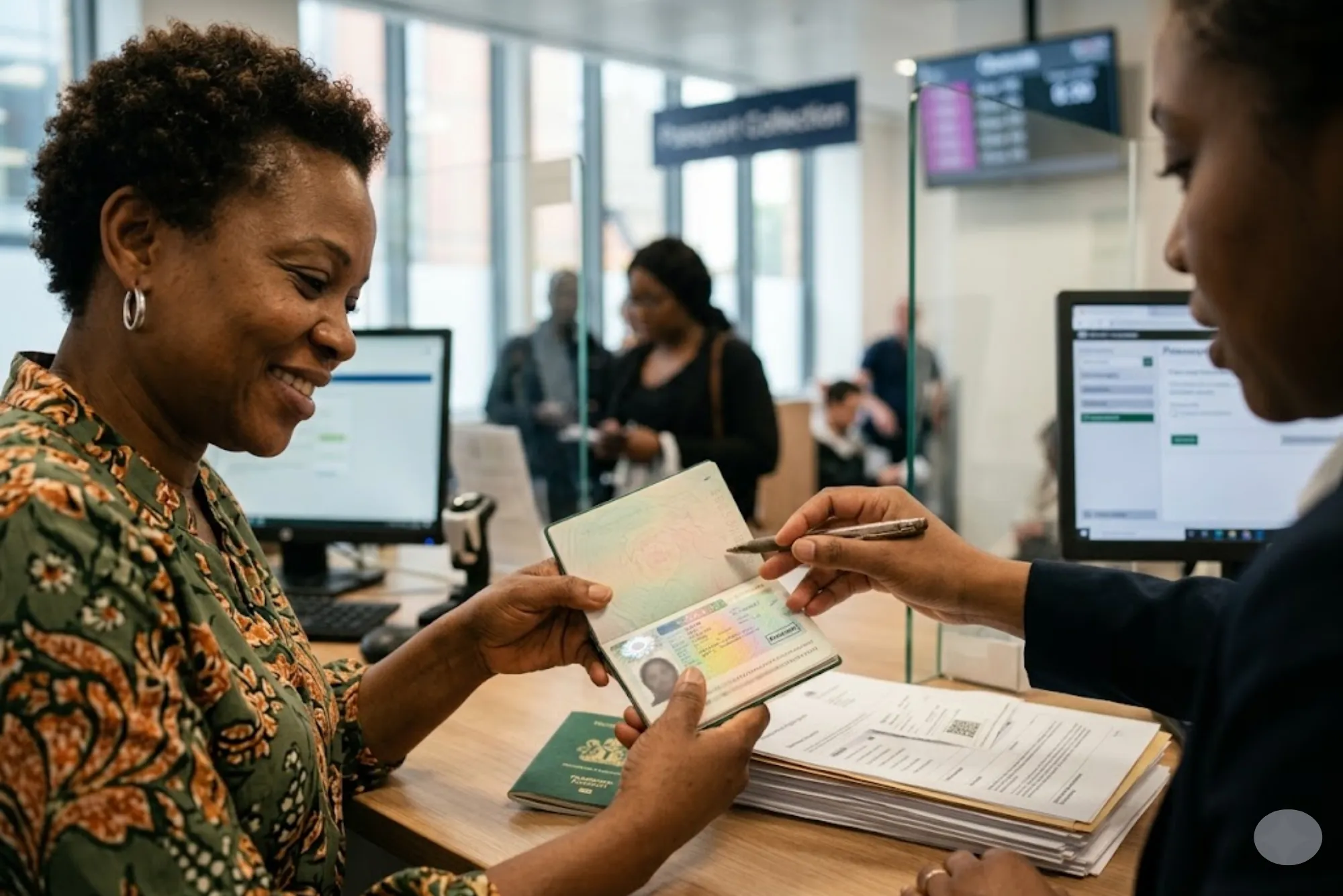
- Attend your biometric appointment: Bring your passport and application reference. Fingerprints and a digital photograph are taken. This appointment is mandatory — there are no exceptions.
- Track and receive your decision: Standard processing takes approximately 3 weeks from the biometric appointment. You will receive a decision notice digitally and, if approved, a vignette sticker in your passport or a digital visa record. Always check the details — name, validity, and entry conditions — before travel.
Required Documents for a UK Visitor Visa Application
The UKVI assesses visitor visa applications primarily on two questions: whether you are genuinely visiting for the stated purpose, and whether you will leave the UK at the end of your permitted stay. Your documents must answer both convincingly.
- Valid passport (sufficient validity to cover your planned stay; previous passports helpful to show travel history)
- Recent passport-size photograph meeting UKVI specifications
- Bank statements covering the past 3–6 months showing sufficient funds for your trip
- Confirmed accommodation details (hotel bookings, host invitation letter with host’s ID)
- Return flight booking or proof of onward travel
- Evidence of ties to your home country (employment letter, payslips, property ownership, family responsibilities)
- Travel itinerary or purpose of visit letter
- Travel insurance (strongly recommended; required in some circumstances)
For applicants from countries where documentation standards differ or where additional scrutiny is standard — including many South Asian applicants — the strength of your proof of ties to your home country carries particular weight. A well-prepared application supported by consistent, comprehensive evidence is your strongest tool. If you are navigating complex documentation requirements as an international applicant, our guidance on international mobility paperwork for Pakistani travellers may offer useful parallel context on evidence preparation.
Common Mistakes That Lead to Refused Applications and Wasted Fees
UK visitor visa refusal rates vary significantly by nationality, and many refusals come down to avoidable errors in application preparation. These are the most consistently reported mistakes:
- Inconsistent information — figures in your bank statements that do not match your declared income, or an itinerary that conflicts with your stated accommodation, signal credibility concerns that UKVI takes seriously.
- Insufficient evidence of home ties — failing to demonstrate that you have reasons to return home (job, family, property) remains the most common reason for refusal.
- Funds appearing suddenly before the application — large, unexplained deposits immediately before applying raise questions about the genuine source of funds. Statements should show consistent financial activity over time.
- Applying through unofficial third-party websites — some platforms charge inflated fees and are not authorised to submit applications to UKVI. Only use the official gov.uk system or a registered immigration adviser (OISC-regulated).
- Paying the wrong fee — using an outdated fee table, especially before and after the April 2026 increase, can result in an incorrect payment and application rejection without refund.
- Leaving too little time before travel — standard processing takes 3 weeks. Applying 2 weeks before your flight means either paying £500+ for priority processing or risking missing your departure.
UK Family and Settlement Visa Fees in 2026
Family visas — covering spouse and partner visas, child visas, and other dependant routes — carry their own fee structure and are among the most significantly impacted by the 2026 increase. Naturalisation as a British citizen now costs £1,709, while Indefinite Leave to Remain (ILR/settlement) has risen to £3,226 per applicant.
One positive change in 2026: the fee for registering a child as a British citizen has been reduced from £1,214 to £1,000 following a successful legal challenge — a meaningful saving for families who have been waiting to apply. For families planning long-term settlement, building a realistic budget that covers not just the initial visa but IHS for all family members and eventual settlement fees is critical to avoiding financial surprises at later stages of the immigration journey.
If you are also planning to work or live in the UAE region as part of a broader mobility plan, our guide to Sharjah and our Dubai lifestyle and relocation context offer useful regional background for families considering options across destinations.
Frequently Asked Questions About UK Visa Costs in 2026
1. Is the UK visa fee the same from every country?
The government application fee set by UKVI is the same worldwide — £135 for a 6-month Standard Visitor Visa regardless of nationality. However, Visa Application Centre fees charged by VFS Global or TLScontact vary by country, making the total cost of applying higher in some locations than others. Always check local VAC fees before budgeting.
2. Can I get a refund if my UK visa application is refused?
No. The UK visa application fee is non-refundable once your application has been submitted and biometrics have been given. This applies even if your visa is refused, if you withdraw the application, or if your circumstances change. The priority service fee may be refunded only if UKVI fails to meet the committed processing timeline.
3. Do I pay the Immigration Health Surcharge on a tourist visa?
No. Standard Visitor Visa holders are exempt from the Immigration Health Surcharge. The IHS only applies to visas valid for more than 6 months — including work, study, and family visas. Visitor visa holders have access to NHS emergency treatment but should carry travel insurance for routine care.
4. How long does a UK Standard Visitor Visa take to process?
Standard processing takes approximately 3 weeks from the date of your biometric appointment. Priority Service aims to deliver a decision within 5 working days (£500 extra). Super-Priority Service aims for a next-working-day decision (£1,000 extra), though availability varies by country and visa type.
5. What changed about UK visa fees from April 2026?
From 8 April 2026, the Home Office raised almost all immigration and nationality fees by 6–7%. A 6-month visitor visa rose from £127 to £135. A Skilled Worker entry clearance for up to 3 years rose to £819. ILR now costs £3,226. The only downward change was the child citizenship registration fee, which dropped from £1,214 to £1,000.
Planning Your UK Trip Budget: What to Take Away
The visa to UK price in 2026 is higher than it has ever been — and the April 2026 increase affects every category from tourism to settlement. For most tourist applicants, the realistic total cost of a 6-month UK visitor visa sits between £144 and £211 when you add the government fee to VFS service charges and optional extras, depending on where you apply from. For workers, students, and families, the IHS transforms the cost equation dramatically — a three-year skilled worker with dependants can easily face total visa-related costs exceeding £10,000 before accounting for any legal support fees.
The practical rules are consistent across all categories: apply through the official gov.uk system only, verify the current fee on the day you submit, prepare your supporting evidence thoroughly before paying (because fees are non-refundable), and apply early enough that standard processing is sufficient — saving you the considerable cost of priority services.
For travellers comparing visa costs across popular destinations before deciding on an itinerary, our full range of travel price and visa cost guides covers destinations from the UK to the UAE and beyond — with the same level of fee detail and application guidance.